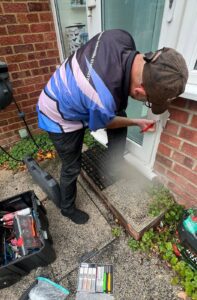
Your uPVC door worked fine yesterday. Today the key turns like you are wrestling it, or the handle won’t lift and engage the lock properly. Nothing has been broken, nothing has been forced. It has just started, seemingly out of nowhere, and now you are standing on the step having a quiet word with your own front door.
I see this more than you would think, especially on the Waterside and around Southampton where damp air and coastal conditions work away at these doors all year round. The good news is that it is not always a replacement job. More often than not it is something small that has crept up on you, and it can be put right without making a meal of it.
What is actually happening inside your door
uPVC doors don’t wear evenly. The frame can shift a touch with temperature changes, with the house settling, or with moisture being absorbed over time. When that happens, the multipoint lock sits a fraction out of line with the keeps and strike plate on the frame. The key still goes in, but the bolts don’t want to slide home cleanly. It is a geometry problem, not a broken lock, and the door is simply telling you it is no longer sitting square.
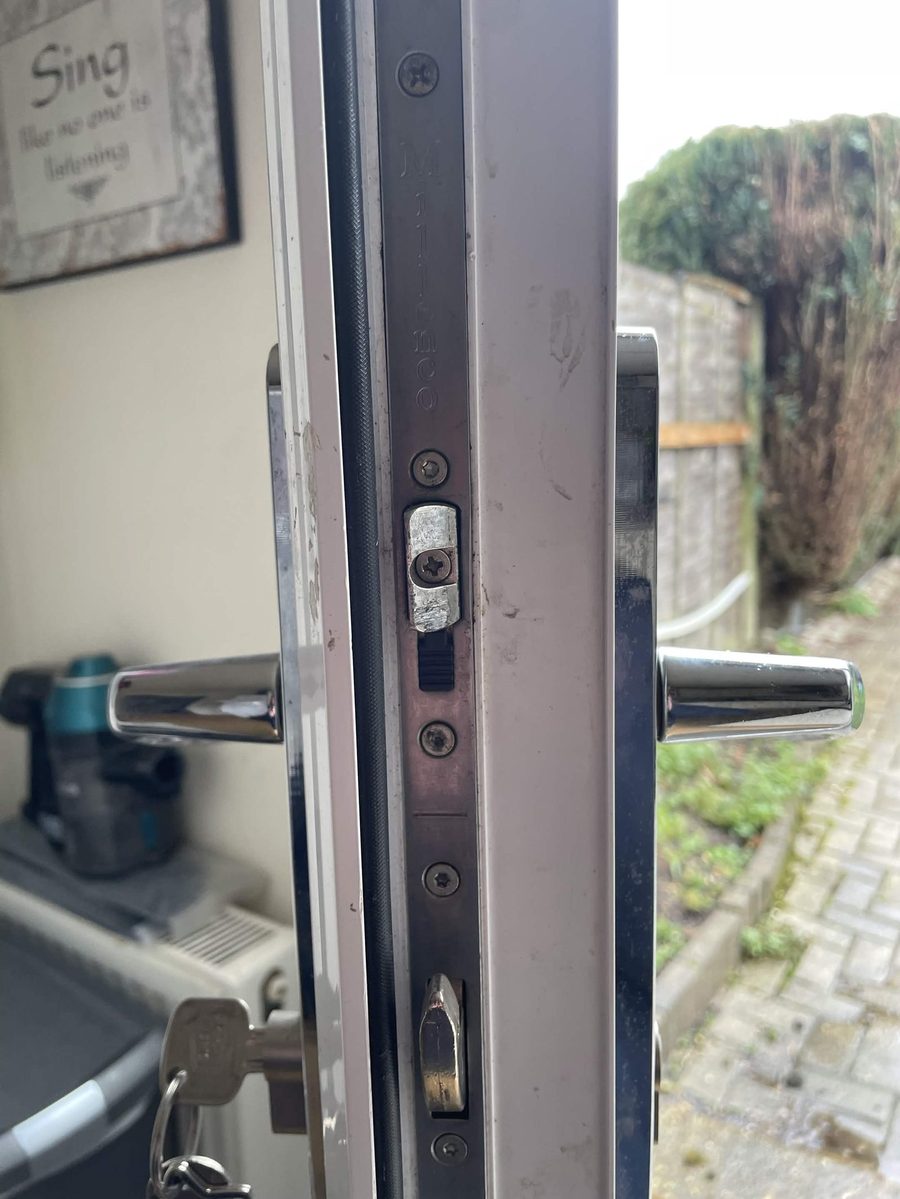
Another common culprit is the cylinder itself. The pins inside wear over time, or grit and dust find their way in. The key still turns, but it is stiff and you can feel it catching. On coastal properties, salt in the air speeds up corrosion inside the mechanism too, so things stiffen up sooner than they would a few miles inland.
Less common, but worth a look, is the hinges loosening or the door sagging slightly on its frame. That throws the whole alignment out. A sagging door catches on the frame and drags the lock out of square with the keeps.
And sometimes it really is just honest wear. A lock used several times a day, every day, for years on end will eventually stiffen. That is normal. It does not mean it has failed, only that it is asking for a bit of maintenance.
What you can try first
Check the hinges. Open the door and look at the hinges down the edge. If any screws are loose, tighten them with the right screwdriver. A sagging door catches on the frame, and this is an easy win that often sorts it on the spot.
Clean the lock. Wipe around the cylinder and the strike plate with a dry cloth. Blow out the dust with compressed air if you have a can handy. Sometimes grit is all it takes to cause resistance, and you would be surprised how often a clean sorts it.
Lubricate carefully. Use a dry lubricant such as graphite powder or a PTFE-based spray. Steer well clear of oil or grease, because they attract dirt and make things worse down the line. Apply it to the cylinder, then work the key in and out a few times. Go light. A little does more good than a lot.
Check the strike plate. Open the door and look at the metal plate and keeps on the frame. The bolts should slide in without binding. If the holes have shifted or a plate is bent, it needs adjusting or replacing.
If you have done all four and the key still fights you, the trouble is inside the mechanism itself, and that is where it stops being a job for the kitchen drawer toolkit.
When to call a locksmith
If the hinges are tight, the lock is clean, the strike plate lines up, but the key still resists, that is where I come in. I can strip and service the lock, or fit a new one if it is worn past saving. For uPVC doors in Southampton and the Waterside, non-destructive repair is always my first move. I won’t drill or break anything unless there is genuinely no other way, because nobody wants a bill for a new lock when a service would have done.

Give me a ring day or night. I will tell you straight whether it is a ten-minute fix or a lock replacement, with no fuss and no spinning it out.
Frequently asked questions
Can I use WD-40 or 3-in-1 oil on my lock?
Not if you want it to stay working. Oil attracts dust and grit, which gets trapped inside the mechanism and makes things worse before long. Dry lubricants like graphite or PTFE spray are made for locks. They do the job without collecting muck, so stick with those.
Will a stiff lock get worse if I keep using it?
It can do. If the bolt is catching on the strike plate, forcing the key puts strain on the mechanism. The cylinder wears faster, and you run a real risk of snapping the key off in the door. Far better to get it sorted early than let it drag on and turn a small job into a big one.
Is a hard-to-turn key always a sign the lock needs replacing?
No, not at all. A service and a clean sort out most cases. I would want to look at it first, but if the lock is otherwise sound, I will service it before anything else. Replacement is a last resort, not a starting point.
Why does this happen more on the Waterside?
Salt in the air and moisture in the atmosphere speed up wear on metal parts. Coastal properties also see more swings in temperature and humidity, which makes uPVC frames move about a bit more than they would further inland. It is just the environment doing what it does.
More from Keywise: uPVC door repair and door mechanism repair.
Frequently asked questions
Why do I have to lift the handle hard to lock my uPVC door?
That stiff lift usually means the door has dropped slightly and the multipoint bolts are no longer lining up with the keeps on the frame. You are fighting the misalignment, not the lock itself. Tightening the hinges or adjusting the keeps often brings it back into line without any new parts.
My uPVC door locks fine when open but not when shut. What does that mean?
If the mechanism works freely with the door open but binds when closed, the problem is alignment rather than the lock. The door is sitting a fraction out of square, so the bolts catch on the frame as they try to extend. This is a common adjustment job and usually a quick fix.
How much does it cost to repair a uPVC door lock in Southampton?
A service, clean and realignment is far cheaper than a full replacement, and it is what I try first wherever possible. If the mechanism is worn past saving, a new multipoint lock costs more but still beats replacing the whole door. I will tell you straight which one you are looking at before any work starts.
Should I keep trying the key if it suddenly won’t turn at all?
No, stop before you snap it. Forcing a stiff key puts real strain on the cylinder and a broken key inside the lock turns a small job into a bigger one. Step back, try the handle gently, and if it still won’t go give a locksmith a ring rather than risk it.