Quick answer: The stars are a points system for resisting attacks like lock snapping. A 3-star cylinder handles that protection on its own, while a 1-star cylinder needs a 2-star security handle to reach the same total. Both routes work, but a 3-star cylinder is the simpler, more reliable choice for most doors.
I get asked about star ratings more often than almost anything else, and I understand why. You walk into a DIY shop, or you have a look online, and there are these little stars on the packaging. One star, three stars, sometimes a diamond thrown in for good measure. It all looks a bit like a hotel rating, and it is not obvious what any of it actually means for your front door.
Over nearly 20 years fitting locks around Southampton and the Waterside, I have seen plenty of homes let down by cylinders that looked the part but offered next to no real protection. So let me clear up what the stars mean, in plain terms, and tell you what I would actually put on my own door.
What does the TS007 star rating actually measure?
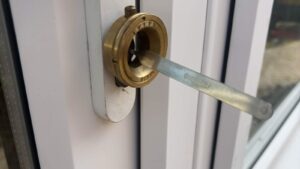
TS007 is a British Standard kitemark scheme that grades euro cylinders on how well they resist common attacks. The big one is lock snapping, which is where a burglar grips the cylinder, snaps it in two, and gets at the mechanism inside. It is quick, it is quiet, and for years it was one of the most common ways of getting into a home with a uPVC or composite door.

The stars work as a points system. A cylinder can earn up to three stars on its own, and a security handle or escutcheon can add stars on top. So you might see a 1-star cylinder paired with a 2-star handle, and together they make up the full three stars needed for proper protection. That is where a lot of the confusion comes from. People see “1 star” and think it is rubbish, when in fact it was designed to be part of a set.
The gold standard is a 3-star cylinder tested to the SS312 Diamond standard as well. That means it has passed on its own, without needing a fancy handle to prop it up. It resists snapping, drilling, picking, and bumping. That is the level I aim for on most jobs, because it takes the guesswork out of it.
3-Star or 1-Star, so which do I actually need?
Here is the honest answer. For most homes in Southampton, I recommend a 3-star cylinder every time. The reason is simple. A 3-star cylinder stands on its own two feet. You do not have to worry about whether your handle is doing its share of the work, or whether someone swaps the handle down the line and quietly undoes your security.

A 1-star cylinder is not useless, but it only reaches full protection when it is paired with the right 2-star hardware. In the real world, people replace handles, tenants come and go, and nobody keeps track of which star handle is fitted. So the safer bet is to put all the security into the cylinder itself. That is the approach I take when I do an anti-snap cylinder upgrade for a customer, because it means the protection travels with the lock, not the trim around it.
There is also the matter of insurance. A lot of policies now ask for anti-snap or kitemarked cylinders as a condition, and some specifically mention 3-star or SS312 Diamond. It is worth reading the small print, because a cheap fix can cost you far more if a claim gets knocked back.
How anti-snap cylinders actually work
The clever bit with a good anti-snap cylinder is the sacrificial section. The cylinder is built with a weak point designed to break off first, under attack, leaving the core of the lock intact and still doing its job. So when someone tries to snap it, they get a bit of metal in their hand and a door that is still firmly locked. It sounds counterintuitive, giving the burglar something to snap, but it works because the important part stays put.
The better cylinders also add anti-drill pins, hardened steel inserts, and anti-pick features. All of that adds up to a lock that takes far too long and makes far too much noise to be worth the effort. Most opportunist burglars want to be in and out in under a minute, so anything that slows them down usually sends them elsewhere.

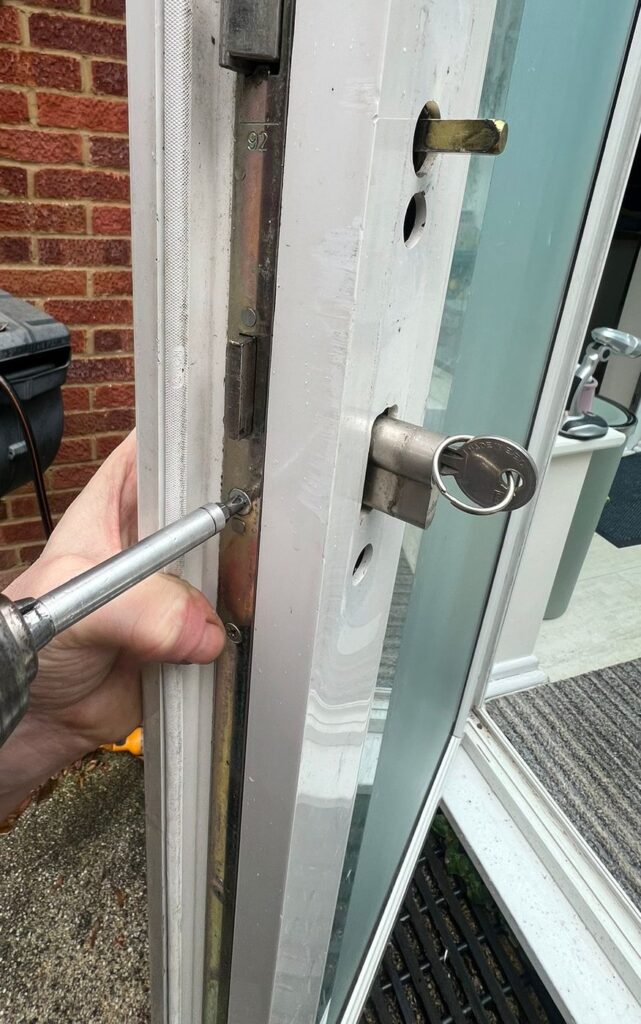
One thing worth mentioning is sizing. A cylinder that sticks out too far past the handle is much easier to grip and snap, no matter what star rating it carries. Part of my job is measuring your door properly so the cylinder sits flush. A well sized 3-star cylinder, fitted correctly, is a genuinely tough nut to crack.
What I would fit on my own door
If it were my house, I would fit a 3-star SS312 Diamond cylinder, sized to sit flush, and be done with it. No fussing over handle ratings, no ambiguity, just solid protection that meets insurance requirements and actually holds up on the doorstep.
If you are not sure what you have got at the moment, I am happy to take a look. There is no call-out fee, I am here 24 hours, and I will tell you honestly whether your current setup is fine or whether it needs sorting. No pressure and no upselling, just a straight answer.
How do you measure a euro cylinder so it does not stick out and undo all that protection?
Here is the bit most guides skip. A 3-star cylinder is only as good as its fit. If it sticks out past the handle, a burglar can still grip that lip and get a purchase on it, which is exactly what you paid to avoid. Euro cylinders are measured in two halves from the centre of the fixing screw hole to each end, written as internal/external, for example 40/50. Common sizes are 35/35, 35/45 and 40/50. Take both measurements off your old cylinder before buying, and order the exact size so it sits flush. Too long and it protrudes; too short and it sits recessed and rattles. Get the size right and the rating does its job.
According to what I have seen over nearly 20 years fitting locks around Southampton and the Waterside, a cylinder left sticking proud of the handle is one of the most common reasons a decent lock still gets snapped.
Does the size of your 3-star cylinder actually matter?
Here is something the packaging never tells you. Even the best 3-star cylinder can be let down if it is the wrong size for your door. If it sticks out too far past the handle, a burglar has something to grip and lever against, and that is exactly what snapping relies on. Over my nearly 20 years around Southampton and the Waterside, I have seen good cylinders fitted proud and made vulnerable for the sake of a few millimetres. As a rule, the cylinder should sit flush, or stick out by no more than about 3mm. That means measuring both halves properly, from the centre fixing screw to each edge, before you buy. A 3-star rating on the box only does its job if the fit is right.
Frequently asked questions
What does the TS007 star rating actually measure?
It is a British Standard scheme that grades euro cylinders on how well they resist common attacks, mainly lock snapping. Stars work as a points system. A cylinder earns up to three stars, and a security handle can add stars on top, so both together make up the full three needed.
Should I choose a 3-star or 1-star cylinder?
For most Southampton homes I recommend a 3-star cylinder every time. It stands on its own, so you never worry about whether the handle is doing its share. A 1-star only reaches full protection when paired with 2-star hardware, which people often swap out over time without realising.
How does an anti-snap cylinder actually work?
The clever bit is a sacrificial section built to break off first under attack, leaving the core intact and still locked. The burglar gets a piece of metal and a door that stays shut. Better cylinders also add anti-drill pins, hardened inserts, and anti-pick features to slow things right down.
Why does cylinder sizing matter so much?
A cylinder that sticks out past the handle is far easier to grip and snap, whatever star rating it carries. Part of my job is measuring your door properly so it sits flush. A well sized 3-star cylinder, fitted correctly, is a genuinely tough nut for any opportunist to crack.