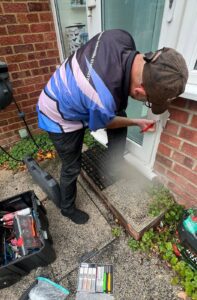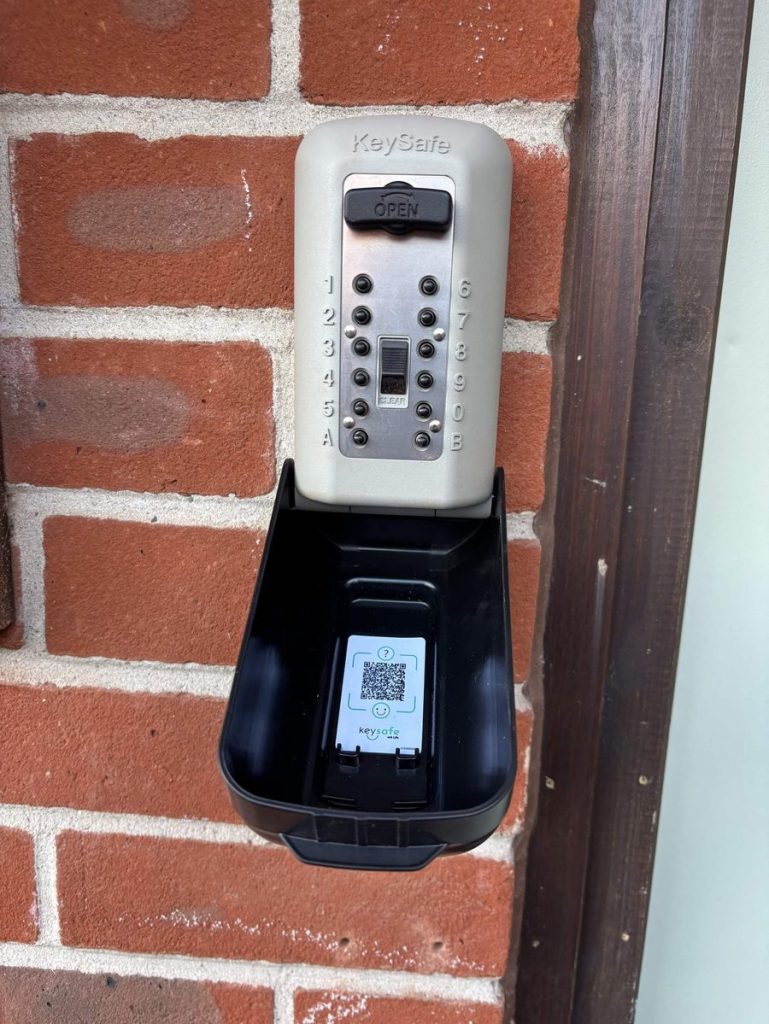
A cheap “sheet” key safe and a police-approved key safe are not the same product at different prices, one is tested to keep a burglar out, the other only claims to. A cheap “sheet” key safe (thin pressed-metal box sold online for around £10–£25, no independent certification) is widely known in the trade to be prised, bent, shimmed or decoded far more easily than a certified unit. And because a key safe holds a genuine working key to your front door, a defeated cheap one doesn’t just fail, it hands a burglar a real key and turns a break-in into a walk-in, which can leave your home more exposed than having no key safe at all. A police-approved key safe is independently attack-tested and certified (typically Sold Secure and/or Police Preferred Specification via Secured by Design, and sometimes LPCB). The price gap is small; the security gap is enormous.
My name’s Bugsy, I run KeyWise, and I’ll supply and fit a police-approved key safe for a flat £150, one visit, about 30 minutes, 12-month guarantee. Below is the honest comparison, from someone who fits these for a living.
By Donald “Bugsy” Edwards, DBS-checked locksmith, based on the Waterside (Holbury, SO45), covering Southampton and Hampshire. 2024 Police & Crime Commissioner Community Volunteer of the Year. Last updated August 2026.
Cheap key safe vs police-approved: the quick verdict
You get what you pay for, but with key safes the maths is lopsided. You’re paying about a hundred-and-twenty quid more for a unit that’s independently tested to resist attack, instead of one that can hand a thief your key. You’re not buying a fancier box. You’re buying the fact that an independent lab attacked it and it held up to a recognised standard. The price gap is small; the security gap is enormous. And remember you’re comparing a box you fit yourself to a unit fitted and guaranteed, the fitting is half of what you’re buying.
Comparison table, cheap “sheet” key safe vs police-approved
Here’s the whole comparison in one glance: a cheap uncertified box against a police-approved unit fitted by KeyWise, across the things that actually decide whether your key stays safe.
| Feature | Cheap “sheet” key safe (~£10–£25) | Police-approved key safe (fitted by KeyWise, £150) |
|---|---|---|
| Material & construction | Thin pressed/stamped sheet metal or die-cast zinc; light body, weak fixings | Solid, reinforced body; hardened locking parts; substantial fixings |
| Independent certification | None, manufacturer’s claim only | Sold Secure graded and/or Police Preferred Specification (Secured by Design) |
| Standards named | None | Sold Secure (Bronze–Diamond); Police Preferred Specification; sometimes LPCB / LPS 1175 |
| Independently tested against attack | No | Yes, attack-tested to a published standard |
| Resistance to physical attack | Low, known to fail fast | High, built and tested to resist |
| Insurance acceptance | Often not accepted; may breach a policy condition | Typically accepted; often specifically required |
| Fitting | DIY, often into weak fixings | Professionally fitted by a DBS-checked locksmith |
| Guarantee | None | 12-month guarantee |
| Typical price | £10–£25 (unit only) | £150 supplied & fitted |
| Net risk to your home | Can increase risk, hands over a working key | Reduces risk, key stays protected |
Are cheap key safes safe to use?
No, cheap “sheet” key safes are made from thin pressed metal, carry no independent certification, and are widely known to be forced or manipulated open quickly. That’s the whole problem: nobody independent has ever tried to break the thing and signed off on how it held up. A police-approved key safe has, which is exactly why insurers and the police point people towards them.
What is a “sheet” key safe?
A “sheet” key safe is a cheap key safe made from thin pressed metal with no independent security certification. You’ll spot them online for a tenner up to about £25. The body and door are commonly thin pressed or stamped steel, or die-cast zinc, what the trade calls pot metal. The mechanism is usually a basic push-button combination that’s nowhere near as robust as a certified lock. And they come with short, thin screws, the fixing points are frequently the weakest part of the whole thing.
The marketing words, “secure”, “heavy duty”, “anti-theft”, are self-declared. Nobody independent has tried to attack that box and signed off on how it held up. You’re trusting the label.
Why thin sheet metal is the problem
Cheap “sheet” key safes are made from thin pressed or stamped metal that can be bent, prised, shimmed or decoded, which is exactly the weakness independent testing is designed to expose. Thin, malleable material deforms under force. Weak fixings mean the whole unit can be pulled away from the wall, the fixing points are often the weakest part. Some cheap units are known to be opened without the correct code at all, which is exactly the kind of weakness independent testing is designed to catch.
I’ll be straight with you about what I’m not going to do: I’m not going to tell you how any of that is done. This is about knowing that these weaknesses exist and are well known in the trade, never how to exploit them. It’s the same principle behind anti-snap locks, explained in plain English: cheap hardware fails independent attack testing, and tested hardware is the fix. Honest caveat, though, not every cheap box is identical, and price alone isn’t proof of weakness. Uncertified is the real problem. If you’re not sure what you’ve got, you can always book a free security check and I’ll tell you straight.
Can a cheap key safe make your home more vulnerable than no key safe at all?
Yes, it can. A visible key safe signals that a key is stored outside, and a cheap uncertified unit can be defeated fast, handing a burglar a genuine, working key to your front door. In that sense a flimsy key safe can be worse than having none.
Here’s the thing people miss. A key safe is not a safe for valuables. It’s a container for a working key, its entire job is to protect the one thing that opens your house. So if a cheap unit is defeated, the thief doesn’t get “stuff”. They get a real key. There’s no forcing anything: they let themselves in. No broken window, no jemmied door, no visible sign anyone was ever there.
A safe for your valuables protects your things. A key safe protects the key to your whole house, so if it fails, it doesn’t just cost you the box, it can hand a stranger the run of your home. And a box by the door quietly advertises that a key lives here. A certified unit that resists attack turns that signal into nothing worth acting on. A flimsy one turns it into an invitation. That’s the sharpest point in this whole article, so I’ll say it plainly: a defeated cheap key safe can leave you worse off than having no key safe at all.
What makes a key safe “police approved”?
“Police-approved” describes a key safe that has passed independent attack-testing, not that a manufacturer has simply claimed it’s secure. A police-approved unit is heavier-gauge or solid-bodied, with a reinforced door, hardened or protected locking components, and a substantial fixing kit designed to resist being pulled off the wall. But the defining difference isn’t the metal. It’s that an independent body has attacked it and certified the result.
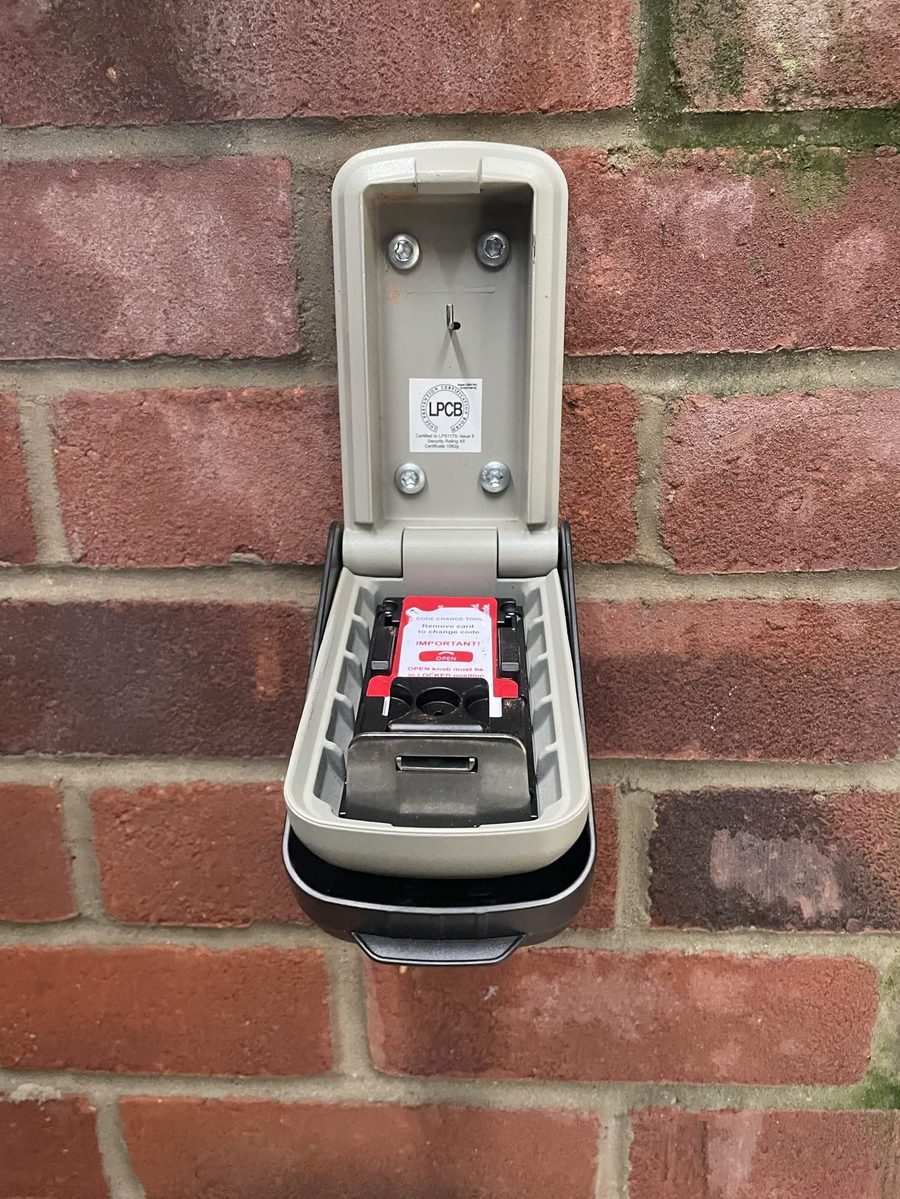
Police-approved key safes are typically certified under Sold Secure and/or hold Police Preferred Specification, and some also carry LPCB certification. In each case an independent body, not the manufacturer, has tested the unit’s resistance to attack. No key safe is un-defeatable, but a certified one has to survive a determined, expert attack to earn the badge, and a cheap box has survived nothing. There’s more on how all this fits together in our home security knowledge centre.
Is a key safe the same as a safe?
No. A safe for valuables protects your possessions. A key safe protects a single working key to your front door, so the standards that matter are the ones about resisting a break-in attempt, not fire or cash ratings. It’s a small point that catches a lot of people out, and it’s the whole reason certification matters: the item inside is the key to everything else you own.
Sold Secure (Master Locksmiths Association)
Sold Secure is the independent testing and certification scheme run by the Master Locksmiths Association (MLA). It grades products across four ascending tiers, Bronze, Silver, Gold and Diamond, so a higher grade means a tougher attack test. Certified key safes carry a Sold Secure grade for their category. Trained testers attempt to defeat the product within a defined test regime, and it must resist for the standard to be met. I won’t quote a specific grade for a specific named product here, because grades differ by model and I only state what I can verify.
Police Preferred Specification (Secured by Design)
Police Preferred Specification is the accreditation awarded by Secured by Design (SBD), the official police security initiative owned by Police Crime Prevention Initiatives Ltd, a police-owned body. A product carrying it has been independently third-party tested to a recognised security standard and met SBD’s requirements. SBD doesn’t test in-house, it requires certification from an accredited body. This is the phrase behind “police-approved”.
LPCB (Loss Prevention Certification Board), where relevant
LPCB certifies attack-resistant products to Loss Prevention Standards; it’s part of BRE Group. For forced-entry resistance the relevant family is LPS 1175, which rates products by their tested resistance to attack. Some higher-end key safes carry LPCB / LPS 1175 certification. Not every police-approved key safe is LPCB-rated, and that’s absolutely fine.
The types of key safe, explained (and why we only fit mechanical, police-approved ones)
Right, the actual types. There are broadly three you’ll come across:
- Push-button mechanical. You press a set of buttons in your chosen combination and the door releases. No battery, no electronics, nothing to go flat.
- Dial or rotary combination. Same idea, worked with a rotating dial or wheels instead of buttons. Again, purely mechanical.
- Electronic or smart. A keypad, or one that talks to an app on your phone, often with codes you can change or send remotely. Very convenient, no argument there.
Now the bit that cuts across all of them: the badge on the box matters more than the type. What you’re after is independent testing, Sold Secure (run by the Master Locksmiths Association, graded Bronze, Silver, Gold and Diamond), the Police Preferred Specification behind the “Secured by Design” mark, and for some products LPCB certification. That’s the difference between a safe that’s been genuinely attacked in a lab and one that just looks the part. Anything with no recognised certification, I’d not trust with a house key, whatever type it is.
And here’s where I’ll be honest about our own line, because my dad taught me the trade and he’s blunt about it: we only fit mechanical, police-approved key safes. Not because electronic kit is rubbish, it’s convenient and it’s improving all the time, but because of what a house-key safe actually is: the thing guarding the way into your home.
A good mechanical unit has to survive hours of real, hands-on physical attack to earn its badge. You can test it and you can trust it, and if someone’s had a go you’ll usually see the marks. The moment you add electronics you also add a second, non-physical way in, a flaw in the software or the wireless side that can be exploited quietly, sometimes in seconds, and leave no mark at all. Physical security you can test. Digital security is only ever as good as its next undiscovered flaw.
You don’t have to take my word for where that road leads, just look at cars. Keyless, electronic entry was sold as pure convenience, and it opened a brand-new door for thieves. According to vehicle-recovery firm Tracker, 93% of the cars it recovered in 2022 had been stolen without the owner’s keys, up from 80% in 2017, beaten by the electronics, not by force. Whole cars, gone in seconds or minutes, no window broken. That’s the trade-off electronic convenience can quietly bring with it.
So that’s the family philosophy, and it’s a practical one, not a grudge: we won’t build that same seconds-not-hours, non-physical weakness into the one small box that guards your front-door key. Tested mechanical, sited properly, fixed to good brick. Boring, maybe. But you can trust boring.
Where should you actually put a key safe?
Here’s the bit most folk get wrong, and it’s nothing to do with which safe you buy. It’s where you stick it. I’ve been fitting these for years and I still see them in the daftest spots, bolted to the wall an arm’s length from the front door, at eye level, lit up like a shop window. If a safe is the first thing a caller sees, you’ve told them exactly what it is and what’s inside.
A few honest rules I’d give my own mum:
- Not right beside the door it opens. Put a bit of distance between the safe and the lock it serves. The two side by side is a gift.
- Out of easy sight. Round the side, in a porch return, behind a bit of planting, anywhere it isn’t obvious from the street or the approach. What a passer-by can’t see, they don’t think about.
- Solid brick or masonry only. A key safe is only ever as strong as what it’s screwed to. Into good brick with the proper heavy fixings, it’s a real job to shift. Into soft render, timber cladding, breeze block or a flimsy bit of trim, the whole unit can be worked loose and taken away to open in private, and then the certification on the box counts for nothing.
- Sensible height and position. Down by the ground or up on show are both poor. Somewhere it’s comfortable to use but isn’t advertising itself is the sweet spot.
- Mind the wall behind it. No point in a tank of a safe if the mortar’s blown or the substrate’s rotten. If the wall’s iffy, we find a better one.
Honestly, where it goes matters every bit as much as which one you buy. A brilliant safe in a stupid spot is a weak safe. A good safe, sited sensibly, on sound brick, with the right fixings, that’s the whole point.
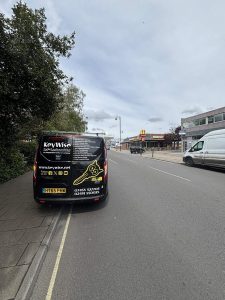
Does a Ring doorbell make your key safe safe?
Short answer: no, and I say that as someone who thinks cameras are a grand idea. A video doorbell records, and it’ll put the wind up a chancer who’d rather not be filmed. That’s worth having. But let’s be straight about what a camera does and doesn’t do.
A camera doesn’t physically stop anybody. If your key safe is a cheap, untested one that can be beaten quietly, all a doorbell gives you is a nice clear recording of somebody calmly opening it, taking your key, and letting themselves in. That’s not a stopped burglary, that’s footage of your burglary. Evidence after the fact isn’t the same as security.
Think of it as belt-and-braces. You want all three working together: a certified, police-approved safe that survives a proper physical go, sensible siting so it’s not sat there begging to be tried, and the camera on top as a deterrent and for evidence. The camera’s the last layer, not the first. Lean on it alone and you’ve spent money watching the wrong thing.
Do I need a police-approved key safe for my home insurance?
Often, yes, and it’s worth checking. Many home insurance policies contain a “reasonable care” or security condition, and some insurers specifically require that any key safe be Sold Secure approved and/or Police Preferred Specification for keys stored in it to be covered. A cheap, uncertified key safe may breach that condition, or may mean the keys aren’t covered at all, which can leave a claim disputed if a burglar gets in using a key from it. Because non-forced entry can complicate a claim, this matters more than people think.
I’m a locksmith, not your insurer, so don’t take this as the final word, check your own policy wording and ask your insurer. If it names “Sold Secure” or “police approved” and you’ve fitted a cheap uncertified box, they may argue you didn’t meet the security condition. For the wider picture on what policies ask of your door locks, I’ve written it up in our guide to locks and home insurance. Care providers and councils arranging key safes for vulnerable people usually specify police-approved units for exactly these reasons.
How much more does a police-approved key safe cost, and is it worth it?
Yes, if it’s a certified one fitted properly. The price difference between a cheap box and a police-approved one is usually only around £125–£140, but the difference in security it buys dwarfs the difference in price. It’s about the most lopsided deal in home security: a small spend buying a big jump in protection. You’re not paying for a fancier box; you’re paying for the fact that an independent lab attacked it and it held up to a recognised standard.
And this is where I’ll happily talk myself out of a job: a cheap box is worse than none, but a good one fitted properly is money well spent. Save the tenner and you might be buying yourself a bigger problem. Spend the difference on key safe installation in Southampton that’s certified and guaranteed, and you buy the thing that actually matters: you stop worrying about it. No more wondering whether the box by the door is a weak spot. It’s on the wall, it’s tested, and it leaves your head. That’s what the extra buys, not a fancier box, a quiet mind.
One more honest point: a key safe is only as strong as its weakest link, the unit, the fixings and where it’s mounted. A certified safe fitted badly, or an uncertified safe fitted well, both leave you exposed. Fitting isn’t an optional extra; it’s half the security.
What does KeyWise charge to supply and fit a police-approved key safe?
A flat £150, all-in. That covers the police-approved unit and professional fitting, it’s one visit of about 30 minutes, it comes with a 12-month guarantee, and there’s no call-out fee. The fitter is me or one of my DBS-checked team, mounted properly into solid masonry, in the right spot, done once and done right. If you want to get a police-approved key safe fitted in Southampton, that’s the whole price, no surprises.
The service, in short:
- Price: £150, supplied & fitted, no call-out fee
- Time: one visit, about 30 minutes
- Guarantee: 12 months
- Fitter: DBS-checked (me or my team)
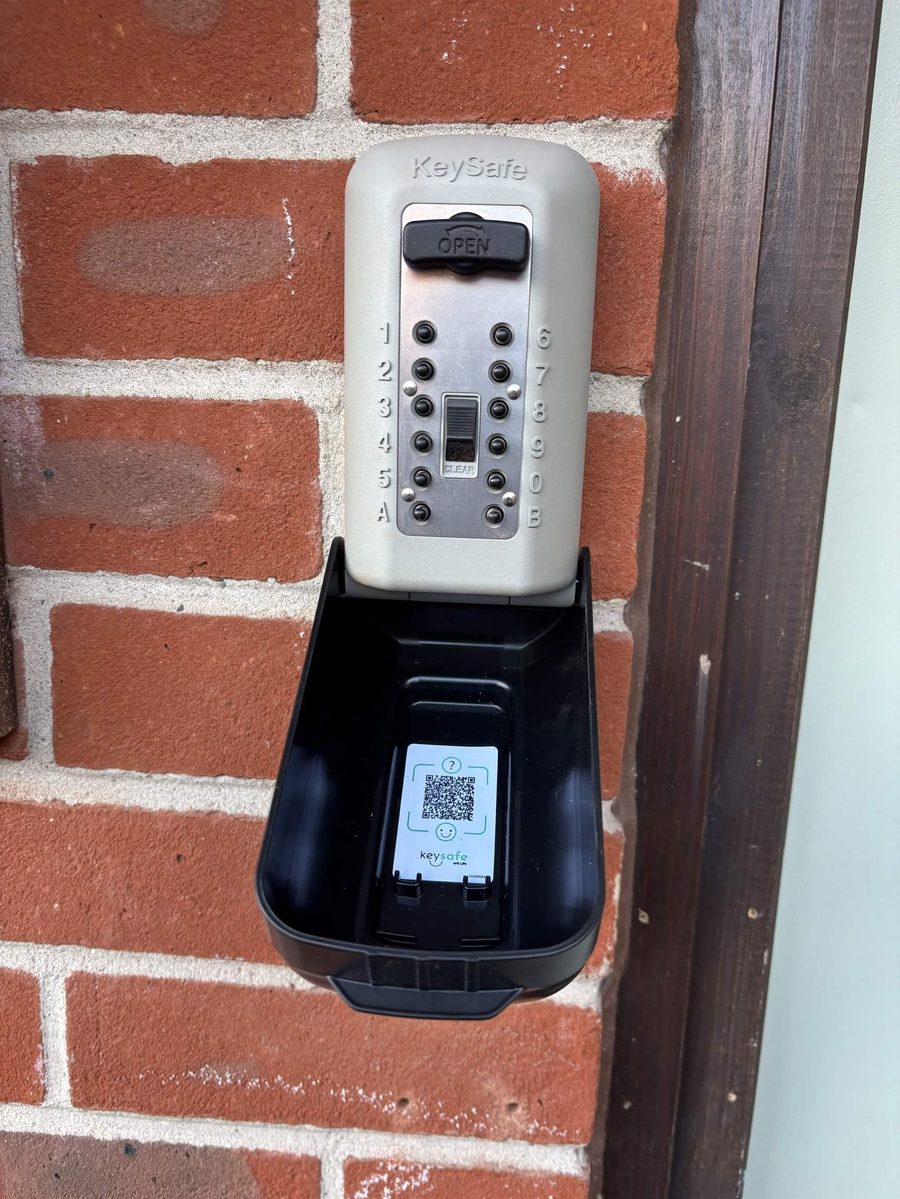
- Standards: LPCB LPS 1175 Issue 8, rating A5 (certificate 1062g) and Police Preferred Specification
Areas we cover
I’m based on the Waterside, so I fit key safes right across the Waterside (SO45), Holbury, Hythe and Fawley, as well as Totton, Marchwood and out into the New Forest. I also cover Eastleigh, Chandler’s Ford, Winchester and Fareham. I’m your local locksmith in Southampton and across Hampshire too, and you can see everything we do here.
Frequently asked questions
Are cheap key safes safe?
No, cheap “sheet” key safes are made from thin pressed metal and are widely known to be forced, prised or manipulated open quickly. They carry no independent certification. A police-approved key safe is built from reinforced metal and independently tested to resist attack, which is why insurers and police recommend them.
Can a cheap key safe make my home less secure?
Yes, it can. A visible key safe signals that a key is stored outside, and a cheap uncertified unit can be defeated fast, handing over a real, working key to your front door. In that sense a flimsy key safe can be worse than having none.
Do insurers require a Sold Secure or police-approved key safe?
Some do. Most policies never mention key safes, but where one does it usually names a certification, and storing keys in a cheap uncertified unit can breach your policy conditions. If a break-in follows, your claim may be disputed or reduced. Always check your own policy wording and ask your insurer.
What does “police approved” or “Sold Secure” actually mean?
A police-approved key safe has passed independent testing under recognised schemes, typically Sold Secure (run by the Master Locksmiths Association, with grades up to Diamond) and/or Police Preferred Specification via Secured by Design. These confirm the unit resists forcing and manipulation, unlike uncertified cheap models.
Are £10 key safes on Amazon secure?
Treat them with caution. A very cheap online key safe is almost always an uncertified “sheet” unit, thin metal, no independent attack-testing, and often insurance won’t accept it. It’s the certification that matters, not the listing, and these rarely carry any.
How much does a police-approved key safe cost fitted?
With KeyWise it’s a flat £150 all-in, the police-approved unit supplied, professionally fitted, with a 12-month guarantee and no call-out fee. It’s a single visit of about 30 minutes with a DBS-checked fitter.
Is a key safe worth it?
Yes, if it’s a certified one fitted properly. The price gap over a cheap box is small, around £125–£140, but the protection gap isn’t. A cheap box can be worse than none; a police-approved one fitted right is money well spent.
Do you fit key safes near me?
Yes, KeyWise covers Southampton, the Waterside (SO45) and across Hampshire, including Holbury, Hythe, Fawley, Totton, Marchwood, Eastleigh, Winchester and the New Forest. Give me a ring and I’ll come to you.
Where’s the best place to fit a key safe?
Not right next to the door it opens, and not on show from the street. Ideally somewhere a bit tucked away, at a sensible height, fixed into solid brick or masonry with proper heavy-duty fixings. The wall it’s screwed to matters as much as the safe itself, a strong safe on a weak wall can be levered off and opened elsewhere.
Are electronic or smart key safes secure?
They’re convenient, and the good ones are improving, but for something guarding a house key we only fit tested mechanical, police-approved units. Electronic kit adds a second, non-physical way in that can be exploited quietly without leaving a mark. A certified mechanical safe has to survive hours of hands-on physical attack to earn its badge. Whatever type you choose, look for Sold Secure, Police Preferred Specification or LPCB certification.
Get it done right, £150, one visit
Here’s my honest bottom line. Don’t waste a tenner on a box that can hand a stranger your key. And don’t lie awake worrying about the one you’ve already got, let’s just sort it. I’ll get a police-approved key safe fitted for £150, one visit, guaranteed for 12 months. Not sure what you need? Book a free, no-obligation security check and I’ll give it to you straight.
Call or text Bugsy on 07453 327708. KeyWise 24hr Locksmiths, rated 5.0 from 310+ Google reviews, DBS-checked, no call-out fee, and proud to be the 2024 Police & Crime Commissioner Community Volunteer of the Year. There’s plenty more home-security guidance in our knowledge centre if you fancy a read first.
Bottom line: an uncertified cheap key safe can hand a burglar a working key; a Sold Secure or Police Preferred unit, fitted properly, is tested to stop that, and the extra cost is small next to what it protects.