Quick answer: If you have to lift the handle hard to lock your uPVC door, the multipoint points are no longer meeting the frame keeps cleanly. Usually the door has dropped slightly on its hinges, forcing you to fight the mechanism. Catch it early before it fails completely. No call-out fee, 24 hours.
If you have got a uPVC door that only locks when you give the handle a good hard lift, you are not imagining it and you are not doing it wrong. That extra shove you have started giving without even thinking about it is a warning sign, and it is one I see all the time across Southampton and the Waterside.
I fix these doors every week, and the story is nearly always the same. It starts with a handle that needs a firm lift to throw the lock. Then over a few weeks or months it gets stiffer, until one day you lift it and nothing happens at all. Usually that day is a cold morning when you are already late, or a wet evening when you just want to get indoors.
The good news is that this is one of the easiest problems to catch early. If you sort it while it is just a bit stiff, you save yourself money and the misery of being locked out. Let me walk you through what is actually going on inside that door.
What is actually wearing when you have to lift so hard?
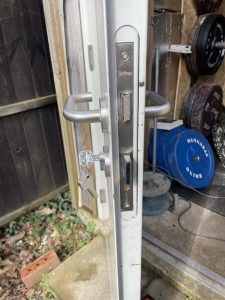
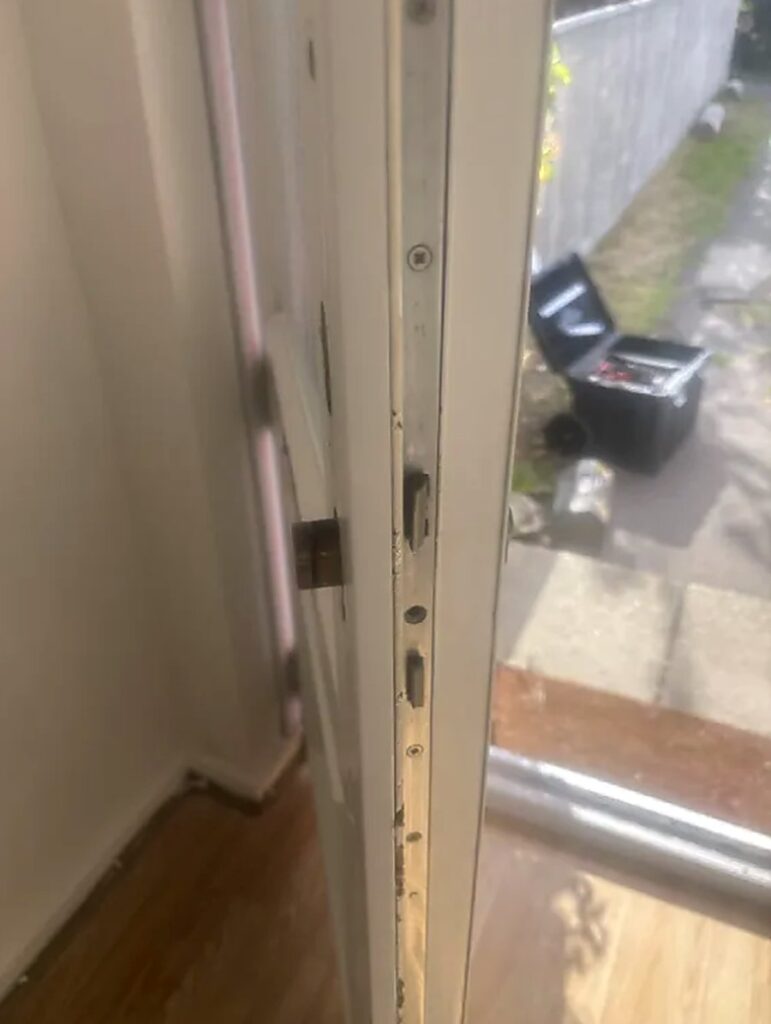
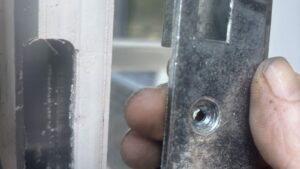
When you lift the handle on a uPVC door, you are driving a strip of metal inside the door called a multipoint mechanism. That strip pushes several locking points out at once, usually a couple of hooks, some rollers and a central latch, all along the edge of the door. When it works properly, one smooth lift shoots them all into the frame with barely any effort.

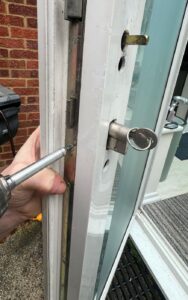
The reason you are having to lift hard is that those locking points are no longer lining up cleanly with the keeps in the frame. A uPVC door drops a little over time. The hinges wear, the door sags on its own weight, and the whole slab settles a few millimetres lower than it was when it was fitted. That does not sound like much, but it is enough for the hooks to catch on the edge of the keeps instead of sliding straight in.
So every time you lift the handle hard, you are forcing metal past metal that was never meant to grind together. That extra strain is what eventually cracks the gearbox inside the mechanism. Once the gearbox goes, the handle spins loose or jams solid, and no amount of lifting will help.
Is it the mechanism or the alignment?
This is the question worth answering before anything else, because the fix is different depending on the cause. Here is a simple test you can do yourself. Open the door wide so it is not touching the frame at all, then lift the handle in mid air. If it lifts smoothly and easily with the door open, but stiffly when the door is shut, your mechanism is probably fine and the problem is alignment. The keeps in the frame just need adjusting so the hooks meet them cleanly.
If the handle feels stiff or crunchy even with the door hanging open, that tells me the mechanism itself is starting to fail. At that point you are on borrowed time. It might keep going for a while, but the wear only goes one way, and it always seems to give up at the worst possible moment.
Either way, catching it now is far cheaper than waiting. An alignment tweak is a quick job. A worn mechanism can often be swapped without replacing the whole door, and I cover exactly that in my guide to uPVC door and multipoint lock repair in Southampton. Leaving it until the door will not lock at all can mean forcing entry, which turns a small repair into a much bigger bill.
Why does this happen more in winter?
A lot of folk ring me in the colder months convinced the lock has suddenly broken overnight. Really the problem has been building for a while, and the cold weather has just pushed a struggling door over the edge. uPVC contracts a little when it is cold, the seals stiffen up, and any alignment that was already marginal becomes a full blockage. If your handle needs lifting hard in October, expect it to fight you properly by January.
Damp plays its part too, especially down on the Waterside where doors take the weather off the water. Moisture gets into the moving parts, dries out the lubrication and adds friction to a mechanism that is already working too hard.

What should you do about it?
First, stop forcing it. Every hard lift is wearing the gearbox faster. If the handle is stiff, ease off and get it looked at rather than powering through.
Second, do not spray oil or WD-40 into the mechanism as a fix. A light dry lubricant on the moving parts can help, but oil attracts grit and can gum things up worse. It will not solve alignment either.
Third, give me a ring while it is still a niggle. I am based in Southampton and cover the whole Waterside, I am available 24 hours, and I never charge a call-out fee. That means it costs you nothing to have me come and tell you whether it is a five minute adjustment or a mechanism nearing the end. I would far rather sort your door on a Tuesday afternoon than dig you out of a locked doorway on a freezing Sunday night. Bugsy is only a phone call away.
Have you cleaned and lubricated the mechanism before assuming the worst?
Before you go blaming the gearbox or the hinges, it is worth a quick look at the locking strip itself. Muck, grit and old grime build up in the keeps and around the hooks over the years, and that alone can stop the points sliding home cleanly. Open the door, wipe down the strip and the keeps in the frame, then give the moving parts a spray of silicone lubricant. Never reach for WD40 or an oil based product, as they dry out and pull in more dirt, leaving you worse off. Work the handle up and down a few times to spread it through. Sometimes a clean and a proper lube is all it takes.
According to what I have seen across Southampton and the Waterside over the years, a good clean and the right silicone lube often buys a tired mechanism plenty more life before anything needs replacing.
Should you try adjusting the hinges yourself, and what could go wrong?
Here is the bit most people miss. Before you touch a single hinge screw, check whether your door is still under a fitter’s guarantee, because a wrong turn can void it and land you with a bigger bill. Over the years across Southampton and the Waterside, I have seen plenty of doors made worse by a hopeful twist of the Allen key. Over-adjust one way and you throw the door out on the other side. The other thing folk get wrong is the lubricant. Never use standard WD-40 on a lock, as it dries out and attracts grime. Use a proper silicone or PTFE lock spray on the hooks, rollers and latch. If in doubt, ring me. No call-out fee, 24 hours.
Frequently asked questions
Why does my uPVC door only lock when I lift the handle hard?
The door has dropped a few millimetres over time, so the locking hooks no longer line up cleanly with the keeps in the frame. That hard lift forces metal past metal, which strains and eventually cracks the gearbox inside the multipoint mechanism. Catch it early and it is a cheap fix.
How can I tell if it is the mechanism or the alignment?
Open the door wide so it is not touching the frame, then lift the handle in mid air. If it lifts smoothly open but stiffly when shut, it is alignment and the keeps need adjusting. If it feels stiff or crunchy even when open, the mechanism itself is starting to fail.
Why does my door get worse in winter?
The problem has usually been building for a while. Cold weather makes uPVC contract slightly and stiffens the seals, so a door that was already marginal tips into a full blockage. Damp down on the Waterside adds friction too. If it needs a hard lift in October, expect a fight by January.
Should I spray WD-40 into the lock to fix it?
No, please do not. Oil attracts grit and can gum things up worse, and it will not solve alignment. A light dry silicone lubricant on the moving parts can help a little. Give Bugsy a ring instead. I cover Southampton and the Waterside, I am available 24 hours, and there is no call-out fee.