Quick answer: Warm the key gently, not the lock. Hold it in your hands, or heat it with a hairdryer or warm cloth, then ease it in slowly. Hand sanitiser rubbed on the key can help too, as the alcohol melts ice. Never force the key or pour boiling water on the lock.
There is a particular kind of frustration that comes with a frozen lock. You are already running late, the wind is biting, and your key simply will not turn. I have lost count of how many of these calls I get across Southampton and the Waterside when the cold snaps in properly. After nearly 20 years of doing this work, I can tell you that a frozen lock is usually easy to sort out, but only if you go about it the right way.
The trouble is that most people reach for the quickest fix they can think of, and that quick fix often causes more harm than the frost ever would. So let me walk you through what actually works, what to avoid, and how to stop it happening again next winter.
Why do locks freeze in the first place?
A lock is full of small moving parts, and those parts need a tiny amount of space to shift about. Moisture creeps into that space over time. It comes from rain, from morning dew, and even from the condensation that forms when warm air inside your home meets a cold metal lock. When the temperature drops below freezing, that trapped moisture turns to ice and locks everything solid.

It tends to be worse on doors that face the wind or sit in shade all day. Older locks are more prone to it too, simply because they have picked up more grime and moisture over the years. If your lock has been stiff or gritty in the warmer months, the cold will only make it worse, and that is worth keeping in mind before winter arrives.
The wrong ways that make it worse
Let me start with the big one, because I see it far too often. Please do not pour boiling water over your lock. I know it sounds like it would work, and it might even free the ice for a moment, but the water quickly refreezes and now you have twice the problem. Worse still, the sudden shock of boiling water on cold metal can crack the lock casing or damage the seals, and that turns a five minute job into a proper repair.
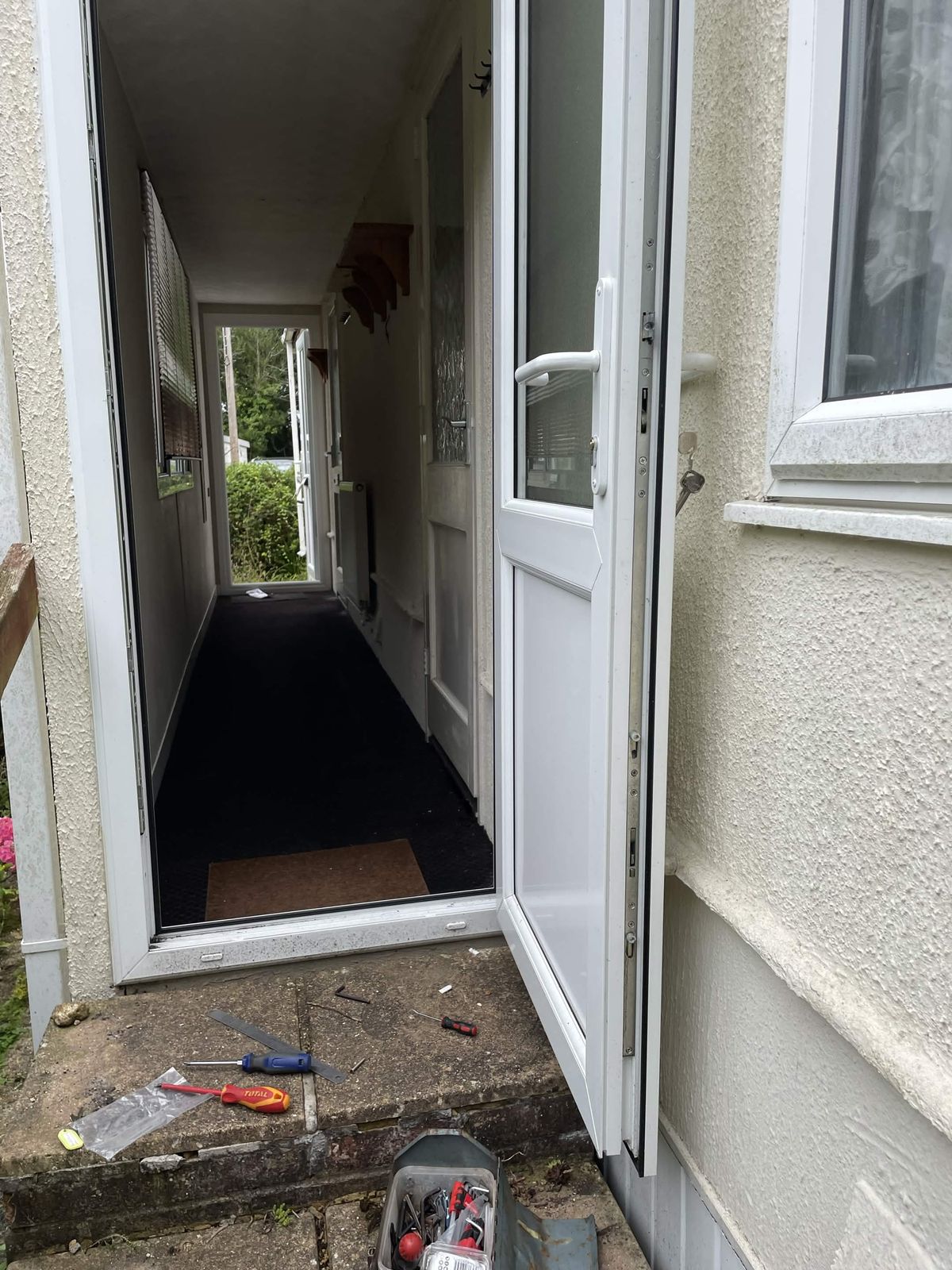
Forcing the key is another mistake. When a lock is frozen, the mechanism will not move, and if you push and twist with all your strength you stand a very good chance of snapping the key off inside the barrel. Once that happens, you are stuck outside with a broken key and a job that now needs a locksmith. A gentle touch is always better than brute force.
I would also steer clear of open flames. People sometimes hold a lighter to the key, and while heating the key can help, waving a flame near a plastic door frame or a uPVC door is asking for trouble. There are safer ways to bring a bit of heat to the problem.
What is the right way to thaw a frozen lock?
The safest and simplest method is patience and gentle warmth. If you can, warm the key itself. Hold it in your hand for a while, or if you have a hairdryer and a nearby socket, use that on a low setting to warm both the key and the lock face. Keep the dryer moving so you do not overheat one spot, and give it a minute or two to do its work.
A hand sanitiser gel can help in a pinch, as many of them contain alcohol which lowers the freezing point of water. Rub a little onto the key, slide it slowly into the lock, and give it a moment before you try to turn. You can also buy dedicated de-icer sprays made for locks, and they are worth keeping in the car during winter.
Whatever you do, ease the key in and out gently rather than forcing it. Once it starts to move, work it slowly to spread the warmth through the mechanism. If the lock is turning but feels rough afterwards, or if it was already sticking before the frost set in, that is a sign the internal parts have worn. In that case it is worth getting the door mechanism looked at properly before it fails completely, because a lock that is struggling in the cold rarely gets better on its own.
How can you stop it happening again?
Prevention really is the easiest part. A quick spray of a proper lock lubricant a couple of times a year keeps moisture out and the parts moving freely. Use one designed for locks rather than a general oil, as the wrong product can gum things up over time.
A small lock cover or even a strip of tape over the keyhole on a very cold night can keep the worst of the moisture out. Keeping the door frame and seals in good order helps too, since a well fitted door lets in less damp.
If your lock keeps freezing, keeps sticking, or has snapped a key, do give me a ring. I cover Southampton and the Waterside around the clock, there is never a call-out fee, and I would far rather help you get it sorted safely than see you battling with boiling water on a frosty morning.
How do you stop a thawed lock from freezing again the same night?
Here is the bit most people miss. Once you have thawed a frozen lock, the water is still sitting inside it, and the moment the temperature drops again that same water turns straight back to ice. So the job is only half done until you drive that moisture out. Work a little powdered graphite or a proper dry lock lubricant into the barrel, turning the key a few times to spread it through the mechanism. This coats the moving parts and helps push the water out so it cannot refreeze overnight. Steer clear of thick oils and general sprays, as they hold onto grit and can gum the lock up worse come the next cold snap.
According to what I have seen across Southampton and the Waterside over nearly 20 years, the folk who lubricate the lock the moment it thaws are the ones who do not ring me back the very next frosty morning.
Which lubricant should you use once the lock is thawed?
Here is the bit most people skip. Once you have thawed the lock and the key turns freely again, get some lubricant into it straight away, or the leftover moisture will simply freeze again overnight. My advice after nearly 20 years on the tools is to reach for a proper dry lubricant, such as a graphite or PTFE based one made for locks. Give the barrel a light puff, then work the key in and out a few times to spread it through. I would steer clear of WD-40 and other wet oils as a long term fix, because they attract grime and gum the mechanism up over time. A quick treatment before winter arrives saves you a cold morning stuck on the step.
Frequently asked questions
Can I pour boiling water on a frozen lock?
Please do not. It might free the ice for a moment, but the water quickly refreezes and doubles the trouble. The shock of boiling water on cold metal can also crack the lock casing or damage the seals, turning a quick job into a proper repair. Gentle warmth is far safer.
What is the safest way to thaw a frozen lock?
Patience and gentle warmth work best. Warm the key in your hand, or use a hairdryer on low across both the key and lock face, keeping it moving. Hand sanitiser gel or a dedicated de-icer spray helps too. Ease the key in and out slowly, never forcing it.
How can I stop my locks freezing again?
Prevention is simple. Spray a proper lock lubricant a couple of times a year to keep moisture out and parts moving. A small lock cover or tape over the keyhole on very cold nights helps. Keeping your door frame and seals in good order also lets in less damp.
What if my key snaps in a frozen lock?
Give me a ring. Forcing a frozen lock is the usual cause, so a gentle touch always beats brute force. With nearly 20 years sorting these across Southampton and the Waterside, I can help around the clock. There is never a call-out fee, so do not battle it alone.