If your French doors are hard to lock, it’s usually because they’ve dropped on their hinges. That’s an adjustment, not new doors. Leave it and one day they won’t lock at all.
The job in short
A new owner in St Denys wanted his locks changed. His French doors locked, but only with a shove, and he thought that was normal. They’d dropped on their hinges, so I adjusted them until both doors sat square and locked with an easy lift.
- Where
- St Denys, Southampton SO17
- What I did
- Both French doors adjusted, and three 6-pin, anti-pick, anti-drill cylinders fitted
- Time
- About two and a half hours
- Prices
- Lock change from £90, door realignment from £85, no call-out fee
Let me be straight with you. I’m a locksmith, not a writer, so this is my honest account of what I found. So here’s what I’d want my own mum to know.
Why are my French doors hard to lock?
Because one or both doors has dropped slightly in the frame. A pair of uPVC French doors is heavy, each door hangs off its hinges on the outside edge, and over the years they sag a little. When they do, the hooks, rollers and bolts on the lock stop lining up with the keeps they lock into. You lift the handle and it fights you. You give the door a push and it goes.
That push is the warning. A door that’s hard to lock today is the one that won’t lock at all one night, usually when you’re trying to go to bed or get out of the house. All that extra strain also wears the mechanism inside the door, and that costs a lot more to put right than an adjustment.
How do I know if my French doors have dropped?
You might not, and this job proved it. The new owner had only ever known his doors stiff, so to him that was normal. I could feel it the moment I worked the handle. You get a feel for it in your hand after enough doors. So I showed him, before and after, and the difference was plain to see.
The signs to look for:
- You have to lift the handle hard, or push the door, before it will lock.
- The gap around the doors is uneven, wider at one end than the other.
- A door rubs or catches at the bottom as it closes.
- The key is stiff unless you lean on the door.
- A handle has started to droop or feel loose. That can be worn springs, see door handle replacement.
On this pair the gap was uneven and they were rubbing at the bottom, which took an extra adjustment to clear.
How does the second French door lock?
This is the part most people don’t know. With French doors, one door does the work and the other waits. The one you open first is the leading door. The other is the secondary door, sometimes called the slave door.
The secondary door is held shut by shoot bolts, long bolts that go up into the frame at the top and down into the sill at the bottom. On many French doors, this pair included, the secondary door has its own cylinder, and that cylinder locks the shoot bolts top and bottom with a key, so they can’t be wound back.
Down the edge of the secondary door is the meeting stile, the raised uPVC section the leading door closes against and locks into. Some call it the centre mullion. Because the leading door overlaps it, the secondary door can’t open until the leading door is open first.
So if your second French door won’t lock or won’t stay shut, check the shoot bolts are going fully into their holes, top and bottom. If the door has dropped, a bolt can miss its hole, top or bottom, and that’s the same fault that makes the leading door hard to lock.
Why was the secondary door harder to work on?
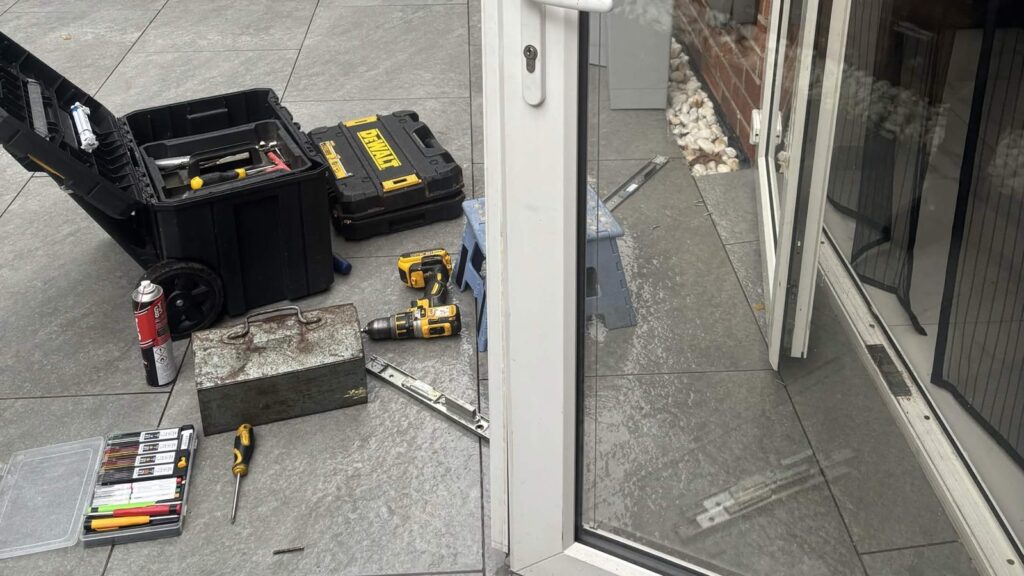
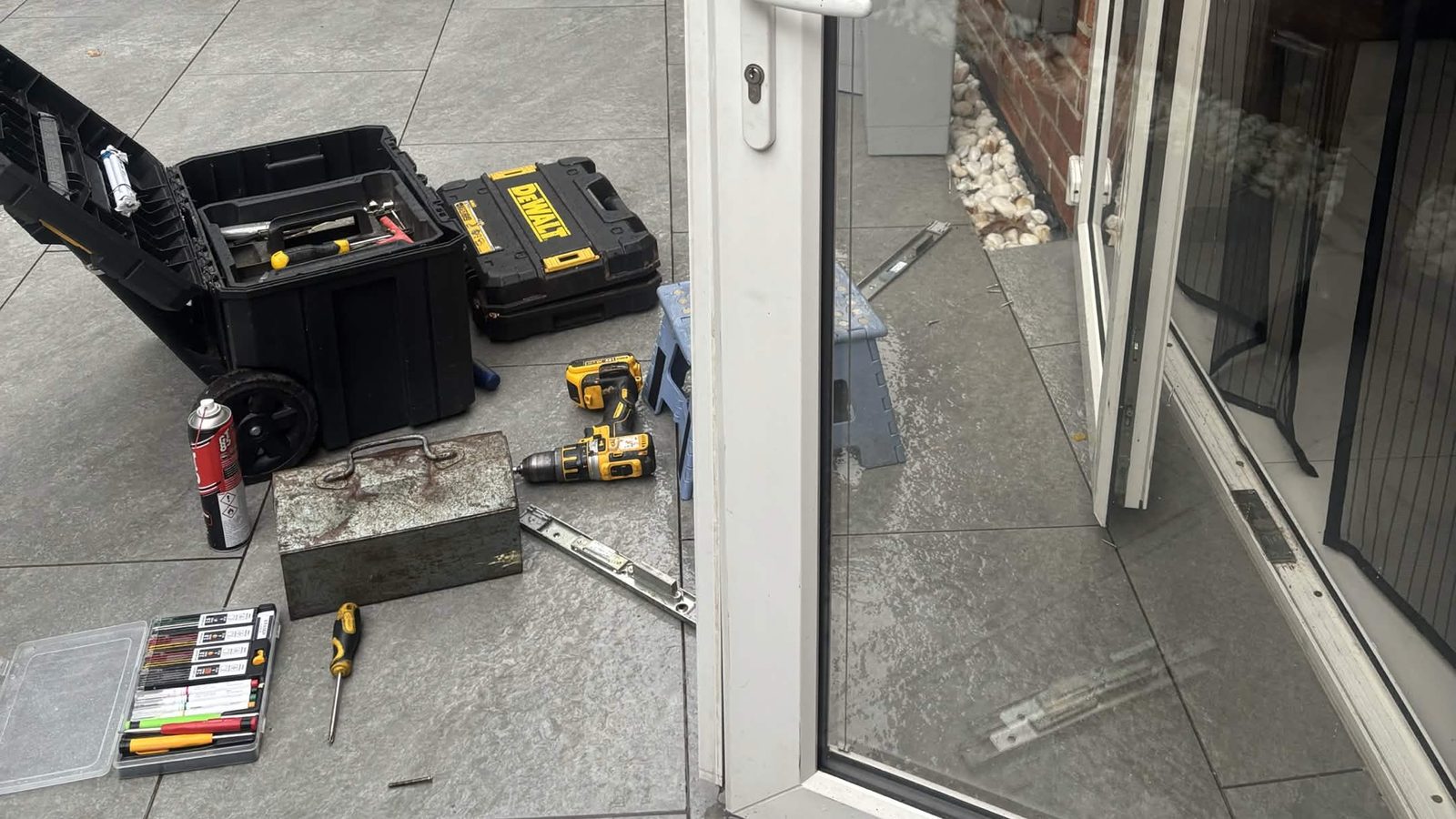
Because to change the cylinder on the secondary door, the meeting stile has to come off first. You can’t get at the cylinder until it’s off. On this door, behind the stile, there was a long strip of steel sitting at an angle, along with a gasket. It’s there for extra support and to seal the gap between the doors. It sits in a groove at an awkward angle, and it was a fiddle getting it back in.
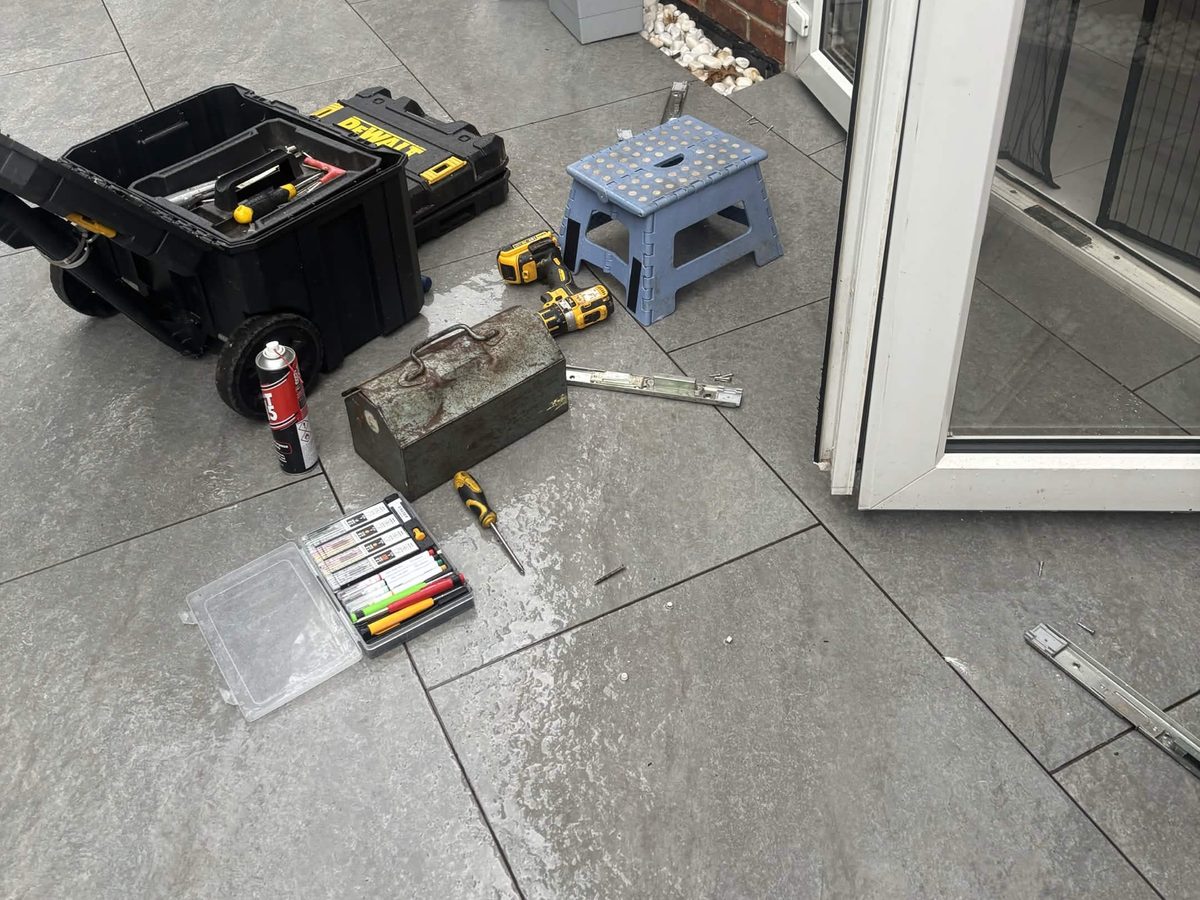
Window and door fitters don’t build these with the next person in mind. It isn’t hard if you’ve done it before. It’s easy to damage if you haven’t, and a meeting stile that’s been forced back on won’t seal or line up properly.
The whole job took about two and a half hours. I wasn’t rushing, and the homeowner was with me while I worked.
Can dropped French doors be fixed without replacing them?
Usually, yes. On this job I adjusted the hinges on the French doors, up and down and in and out, until each door sat square in the frame and the locking points met their keeps again. After that the doors locked with an easy lift of the handle, no shove needed.
There was no extra charge for the adjustments. I was there changing the locks anyway, and the doors needed it. Most uPVC French doors have adjustable hinges for exactly this reason. It’s a door realignment, and catching it while the doors are only stiff is far cheaper than waiting until they won’t lock. If yours are sliding or bi-fold doors rather than French doors, my patio door repair page covers those.
Should I change the locks on French doors when I move in?
Yes, and change all of them, not just the front door. You don’t know how many keys the last owners had cut, or who they gave them to.
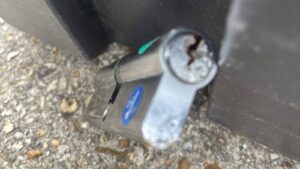
This owner wanted all three changed: the front door and both French doors. The old cylinders were standard ones, with none of the snap, pick or drill protection. I fitted snap secure, anti-pick and anti-drill cylinders in all three, and adjusted the front door as well.
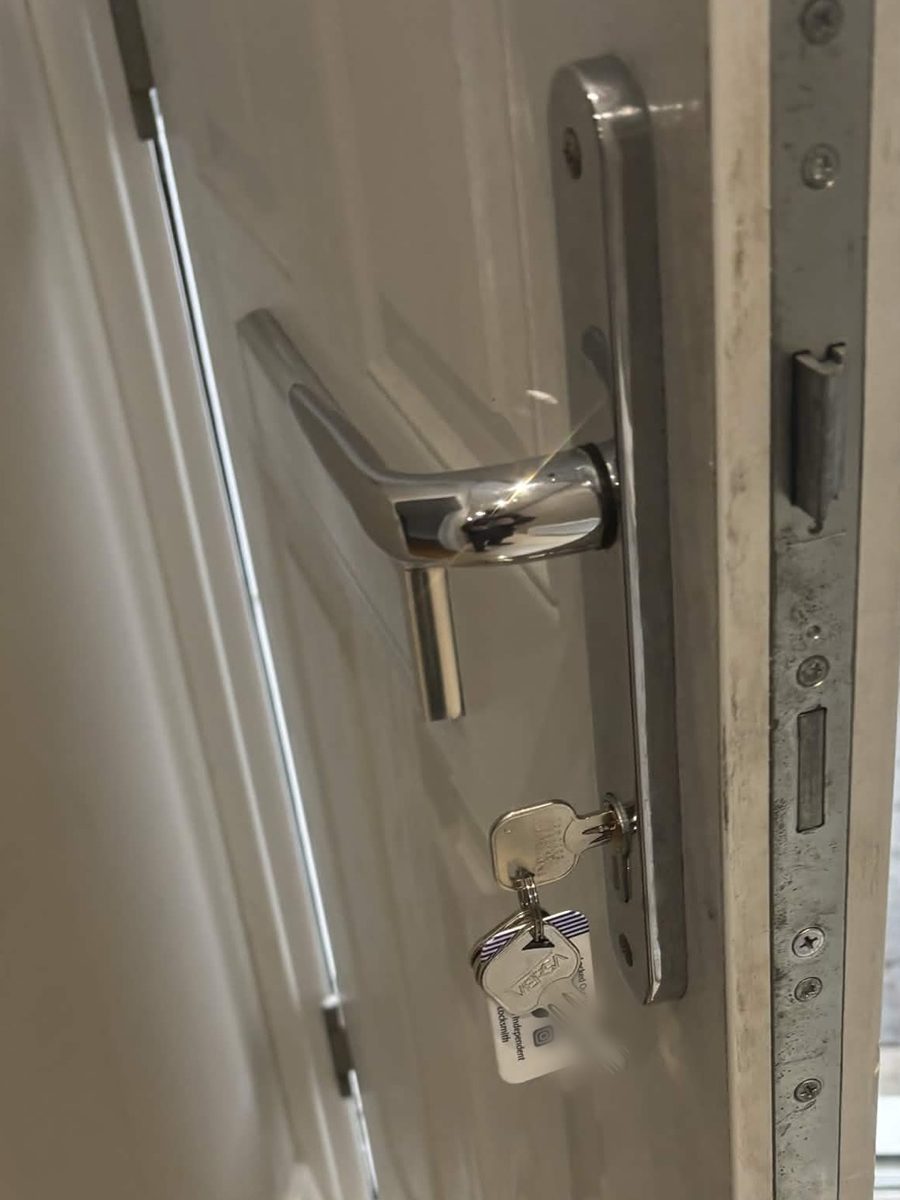
Each lock has its own key, with five keys for each one. If you’ve just bought a house, I’ve written about three doors in Blackfield on a similar first morning, and there’s a home mover lock change service if you want everything done in one visit. I’ve also explained what an anti-snap cylinder upgrade involves.
Can all my doors work on one key?
They can. It’s called keyed alike, and it means one key opens the front door and both French doors. The cylinders have to be made up to suit each other, so they’re ordered in rather than taken off the van, and it costs extra. If you’d like it, ask when you ring and I’ll tell you honestly what it’ll take.
How did he find me?
He works in software, and he told me he’d asked ChatGPT for the most trusted locksmith in Southampton, and it gave him my name.
What does it cost?
My advertised prices are a fair price for the work, and they’re what you should expect to pay. A lock change starts from £90 for the first lock, and a door realignment starts from £85. All my prices are on the prices page.
On this job I took some off the labour, and the door adjustments were no extra charge because I was already there. I can’t help doing that now and then, but don’t take it as the price to expect.
“From” is where a price starts. It can come in under or over. If I think it’ll cost more, I say so on the phone and we agree it before I start, never after. There’s no call-out fee, ever.
FAQ
Can I adjust my French doors myself?
Leave it to someone who’s done it before. Adjusting one door can throw the other out, and a stripped hinge adjuster means new hinges you didn’t need.
Why does only one of my French doors lock?
Usually because the secondary door’s shoot bolts aren’t going fully into their holes, often because the door has dropped. The leading door can feel locked, but until the secondary door is bolted top and bottom, the pair isn’t secure. Get it looked at.
Does the second French door need its own cylinder?
Not every pair has one. Where it does, like on this job, that cylinder locks the shoot bolts top and bottom. If yours has one, change it when you change the others.
What should I lubricate my French doors with?
GT85 or a silicone-based spray. Graphite powder is good too. No oil at all: not 3-in-1, not WD-40. Do the moving parts at least every six months. Every three months is better.
How long does it take to change the locks on French doors?
This one took about two and a half hours, for three cylinders, the door adjustments and taking the meeting stile off the secondary door. A single straightforward cylinder is much quicker.
Do you cover St Denys and Portswood?
Yes. I’m based in Hythe and cover St Denys, Portswood and the rest of Southampton. Have a look at my Portswood locksmith page or the page for a locksmith in central Southampton, or just ring me.
One last thing.
Every now and then, open both doors, the leading door and the secondary door, and work them. Check:
- Does either door rub or catch?
- Is any handle loose or drooping?
- With the secondary door open, do the shoot bolts come out fully, top and bottom? With it shut, does the key turn without forcing?
- Is anything missing, a cover, a screw, a keep?
Keep the moving parts lubricated, and if a handle starts to feel stiff, get it looked at sooner rather than later. If something doesn’t feel right, WhatsApp me a photo on 07453 327708 and I’ll tell you what it probably is before you book anything. If it’s not something I can help with, I’ll point you to someone honest who can.
Bugsy, KeyWise 24hr Locksmiths, Hythe, Southampton.
Be wise, phone Keywise.