The short answer
Look for a kitemark, the British Standard symbol, stamped on the faceplate at the edge of your door or on the lock body. If you see BS 3621 alongside it, your lock meets the standard many policies name. No marking usually means it falls short. That’s your 30 second check.
- Where to look
- The faceplate on the door edge, or the lock body
I get called out to homes all across Southampton and the Waterside where the owner has no idea whether their front door lock actually meets what their insurer expects. Most people never think about it until something goes wrong, and by then it is too late to matter. The frustrating part is that checking your own lock takes about half a minute, and knowing where you stand can save you a real headache down the line.

over the years fitting and repairing locks in this part of the world, I have seen plenty of policies that quietly require a certain standard of lock. If there is a break-in, the insurer will look at whether that standard was met. So let me walk you through a quick self-check you can do right now, what your insurer is really after, and what to do if your door does not pass.
What is BS3621 and why do insurers care?
BS3621 is a British Standard for locks. In plain terms, it means the lock has been independently tested to resist common methods of forced entry, like drilling and picking. A lock that meets this standard is built to a level insurers trust, which is why so many home policies name it directly in the small print.
Insurers care because a decent lock genuinely lowers the chance of a burglary. A five lever mortice deadlock or a euro cylinder that meets the standard is a proper deterrent, and the numbers back that up. From their point of view, if you have agreed to have this kind of lock and you have not fitted one, they may argue you did not hold up your side of the deal. That is the bit that catches people out.
The 30 second self-check
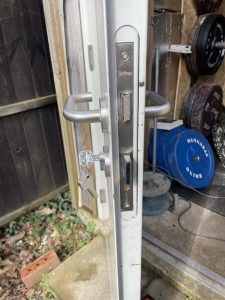
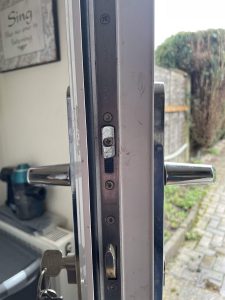
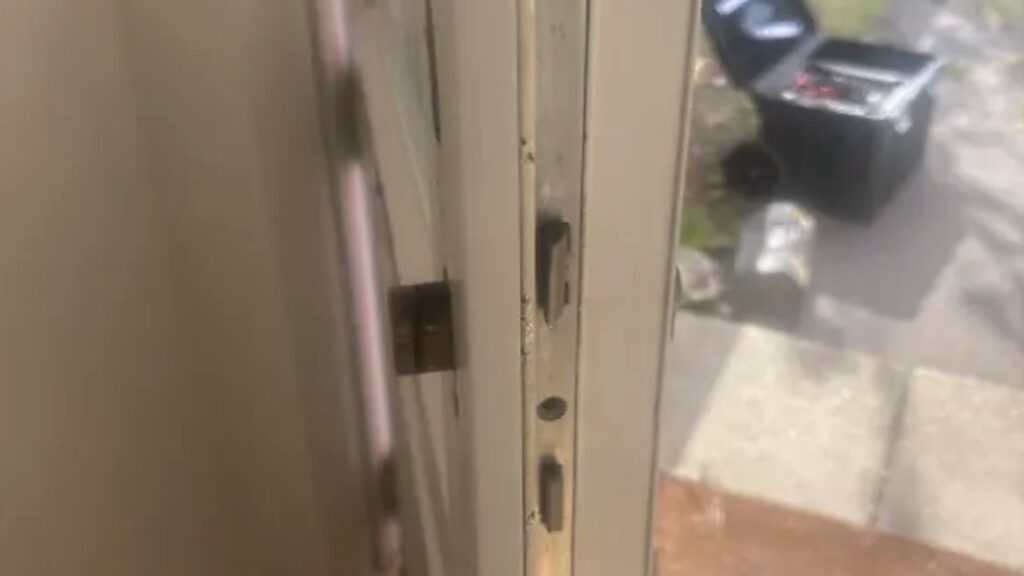
Here is how to check your own front door quickly. First, look at the lock itself. If you have a mortice lock, the one that sits inside the door and turns with a key, open the door and look at the edge where the bolt comes out. Genuine BS3621 locks are usually marked with a British Standard kitemark, a little heart shaped logo, either stamped on the faceplate or on the bolt.
If you have a euro cylinder lock, common on uPVC and composite doors, the marking is often on the body of the cylinder itself, though it can be harder to spot without removing it. Look for the kitemark or a reference to the standard.
Second, count the levers if it is a mortice lock. Insurers typically want a five lever lock rather than a three lever one. A three lever lock is much easier to get past and rarely meets the standard. If you are not sure, the number is sometimes printed on the key or the lock body.
Third, check the bolt throws properly. When you lock the door and take the key out, give the handle a good try. The door should be firmly held with no give. A worn or misaligned lock that does not throw fully is worth sorting regardless of the standard.
If you see the kitemark and you have five levers, you are very likely in good shape. If you see nothing, or you have three levers, that is the point where I would take a closer look.
What should you do if your door fails the check?
Do not panic if your lock does not pass. It is a common situation and it is straightforward to put right. The first thing I would say is dig out your policy documents and read what your insurer actually asks for. The wording varies. Some name BS3621 outright, some simply say a five lever mortice deadlock or a locking system to a similar standard. Knowing the exact requirement means you fit the right thing once rather than guessing.
If you do need to upgrade, it is usually a case of swapping the lock rather than replacing the whole door, which keeps the cost sensible. I have written more about this over on my page about BS 3621 lock changes in Southampton, which goes into what is involved and roughly what to expect.
One thing worth mentioning is that it is not just the front door. Your back door and any other external doors often need to meet the same standard, and patio doors and side gates get overlooked all the time. If you are checking one door, it is sensible to check them all in one go.
Getting it sorted without the stress
Honestly, the whole point of this is peace of mind. You want to know that if the worst happens, your insurance will actually do its job. A lock that meets the standard is also just a better lock, so you get the everyday security benefit whether you ever make a claim or not.
If you have done the 30 second check and you are unsure about what you found, or you know you need an upgrade, I am happy to come out and take a look. I am based here in Southampton and cover the Waterside and SO45 area, I work 24 hours a day, and there is no call-out fee, so a quick look does not cost you anything to arrange. It is always better to know where you stand before you need to rely on it.
What about your back door and windows, not just the front?
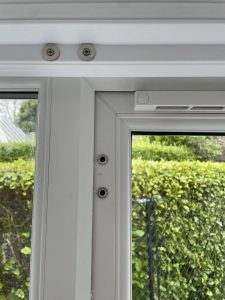
Here is the bit most people miss: your policy almost never stops at the front door. Most insurers expect every external door and every accessible window to meet a standard too. Back doors and patio doors often need a multipoint locking system, and ground floor windows usually need key operated locks. So even if your front door passes with flying colours, a weak back door or an unlocked window latch can still sink a claim. When you do your 30 second check, do not stop at the front. Walk round every outside door and every reachable window, and check each one the same way. That is where the gaps tend to hide.
According to what I have seen across Southampton and the Waterside over the years, it is nearly always the back door or a ground floor window that lets people down, never the front they worried about.
Got a uPVC or composite door? Why BS3621 isn’t the standard you need
Here is the bit the BS3621 check misses. If your front door is uPVC or composite, BS3621 does not really apply to it. These doors use a multipoint mechanism driven by a euro cylinder, and the weak spot has always been the cylinder itself, snapped in half with mole grips. For these doors insurers point to TS007, which uses a star rating up to three stars. Three stars is the usual minimum, met by a 3-star cylinder or a 1-star cylinder paired with a 2-star handle. Across Southampton and the Waterside I fit plenty of these, so if you are unsure which standard your door needs, give me a shout. No call-out fee, 24 hours.
Frequently asked questions
What is BS3621 and why do insurers ask for it?
BS3621 is a British Standard for locks, meaning the lock has been independently tested to resist forced entry like drilling and picking. Insurers name it because it genuinely lowers burglary risk. If your policy requires it and you have not fitted one, they may refuse a claim after a break-in.
How can I quickly check my own front door lock?
Look at the edge of a mortice lock for the British Standard kitemark, a small heart shaped logo, on the faceplate or bolt. Euro cylinders are marked on the body. Check you have five levers rather than three, and make sure the bolt throws firmly with no give when locked.
What should I do if my lock does not meet the standard?
Do not panic, it is common and easy to sort. First read your policy documents to see exactly what is required, as the wording varies. Usually it means swapping the lock rather than the whole door, which keeps costs sensible. Remember to check back and patio doors too.
Do you charge to come and check my locks?
No, there is no call-out fee, so arranging a quick look costs you nothing. I am based in Southampton and cover the Waterside and SO45 area, working 24 hours a day. Fitting locks locally, I am happy to advise on whether you need an upgrade.